
Precast Protein Plus Gel is an essential tool in the field of molecular biology, designed for the separation of proteins through SDS-PAGE (Sodium Dodecyl Sulfate-Polyacrylamide Gel Electrophoresis). These ready-to-use gels enable consistent and accurate separation of proteins based on molecular weight, ensuring high-quality data while minimizing the variability and time-consuming processes associated with hand-casting gels.
Precast gels are particularly valuable in a range of research and industrial applications, from proteomics to biopharmaceutical development. Their ease of use, combined with enhanced consistency and reliability, makes them indispensable for both academic researchers and companies focused on drug development.
The Mechanism Behind Precast Protein Plus Gel
The SDS-PAGE technique operates by denaturing proteins and imparting a negative charge to them via the binding of SDS. This allows proteins to migrate based solely on their size when an electric current is applied, resulting in clear and distinguishable bands on the polyacrylamide gel.

Precast Protein Plus Gel simplifies the preparation of SDS-PAGE experiments by offering ready-made gels with uniform thickness and precise acrylamide concentrations. As a result, researchers avoid potential pitfalls of hand-casting gels, such as uneven polymerization, variable pore sizes, and inconsistent gel composition, all of which can negatively affect the resolution of protein bands.
According to Stanford University, the use of precast gels improves data reproducibility, making it easier to compare results across different experimental runs, laboratories, or even research institutions.
Key Benefits of Using Precast Protein Plus Gel
- High Consistency and Reproducibility: Precast gels are manufactured under strict quality controls, ensuring consistency across all batches. This consistency helps reduce variability in experiments, which is crucial for high-throughput screening or when comparing results across different labs. Studies from Johns Hopkins University show that using precast gels minimizes experimental errors associated with variability in hand-cast gels.
- Time and Labor Efficiency: By using precast gels, researchers eliminate the need for complex and time-consuming preparation steps. According to the FDA, researchers can significantly streamline workflows by using precast gels, which reduces the time spent on gel casting and allows more time for actual data collection and analysis.
- Enhanced Gel Stability: Precast gels offer a long shelf life, maintaining performance over extended storage periods. This makes them particularly useful in laboratories with variable workloads, as gels can be stored and used as needed without any degradation in quality, as outlined by NIH.
- Improved Protein Band Resolution: The high degree of polymerization consistency in precast gels ensures clear and sharp protein bands, even for small or closely related protein molecules. This is especially important in proteomics and diagnostics, where accurate band separation is critical. Research published by PubMed Central (PMC) emphasizes the precision offered by precast gels in these applications.
Applications of Precast Protein Plus Gel in Research and Industry
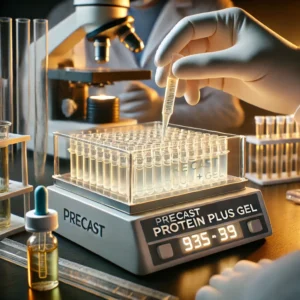
The versatility of Precast Protein Plus Gel makes it applicable in a broad range of settings, including:
- Western Blotting: After separating proteins via SDS-PAGE, they can be transferred to a membrane for western blot analysis. According to the Centers for Disease Control and Prevention (CDC), this method is widely used for the identification and quantification of specific proteins in complex mixtures, such as cell lysates or serum samples.
- Protein Purification and Characterization: Precast gels are essential for evaluating the purity of recombinant proteins or other biologics. Researchers use them to monitor the presence of contaminants or protein degradation, ensuring that samples meet the necessary purity levels for further research or therapeutic applications. As noted by Harvard University, this is a critical step in protein production workflows, especially in biopharmaceutical development.
- Mass Spectrometry Proteomics: Precast Protein Plus Gel is frequently used to resolve proteins before mass spectrometry analysis. This allows for accurate identification of proteins and post-translational modifications, contributing to our understanding of disease mechanisms, as noted in a NIH study on cancer biomarkers.
- Quality Control in Biologics Manufacturing: In biopharmaceutical production, such as the development of monoclonal antibodies and vaccines, precast gels are used to verify the integrity of the final product. The U.S. Department of Health & Human Services (HHS) highlights the importance of SDS-PAGE and western blot techniques in ensuring that biologics meet regulatory standards for safety and efficacy.
- Genetic and Molecular Diagnostics: Precast gels are also employed in diagnostic laboratories for the analysis of proteins related to genetic diseases or infectious agents. According to the FDA, these gels are crucial in clinical diagnostics, where high sensitivity and reproducibility are necessary for patient care.
Innovations in Precast Gel Technology
Recent advances in precast gel technology have led to the development of specialized formulations tailored for specific applications. For example, some precast gels are optimized for low-molecular-weight proteins, while others are designed to enhance the resolution of high-molecular-weight proteins.
In addition, certain precast gels incorporate tricine buffers, allowing for better separation of small peptides and proteins, making them ideal for applications in neuroscience and immunology. NIH has published multiple studies using such advanced gels to explore protein interactions and signaling pathways involved in diseases like Alzheimer’s and Parkinson’s.

Why Choose Precast Over Hand-Cast Gels?
While hand-casting gels may be more economical for some laboratories, the precision and convenience offered by Precast Protein Plus Gels outweigh the benefits of manual preparation. Hand-cast gels are prone to variability in polymerization, which can result in inconsistent results and poor reproducibility. According to research from Yale University, hand-cast gels often suffer from batch-to-batch inconsistencies, leading to variation in protein migration and suboptimal band resolution.
By contrast, precast gels provide a reliable and reproducible medium for protein separation, ensuring that results are both accurate and reproducible across experiments, as demonstrated by studies from the CDC.
Conclusion
Precast Protein Plus Gel provides a range of benefits that improve the consistency, efficiency, and accuracy of protein separation and analysis. Its role in proteomics, biopharmaceutical development, and clinical diagnostics makes it an indispensable tool in modern molecular biology. By eliminating the common issues associated with hand-casting gels, precast gels offer a reliable alternative that streamlines workflows and enhances the quality of experimental data.
Institutions such as NIH, CDC, and FDA continue to emphasize the importance of using standardized, high-quality reagents like precast gels to ensure robust and reproducible results, driving forward scientific discoveries in health and medicine.