
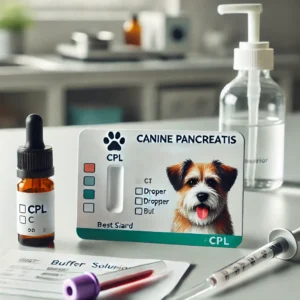
Canine pancreatitis is a potentially life-threatening condition caused by inflammation of the pancreas. Accurate and timely diagnosis is critical for effective treatment and management. The Canine Pancreatitis (cPL) Test Card provides a simple, rapid, and accurate method for detecting elevated levels of canine pancreatic lipase (cPL), a key biomarker of pancreatitis, directly from a small blood sample. This diagnostic tool has become a cornerstone for veterinarians in identifying and managing pancreatitis in dogs.

Understanding Canine Pancreatitis
Types of Pancreatitis:
- Acute Pancreatitis:
- Sudden onset with severe symptoms such as vomiting, abdominal pain, and lethargy.
- Can be life-threatening if not addressed promptly.
- Chronic Pancreatitis:
- Long-term inflammation that can lead to progressive damage and decreased pancreatic function.
- Symptoms are milder but persistent, often including poor appetite and intermittent diarrhea.
Causes:
- Dietary indiscretion (high-fat meals)
- Obesity
- Genetic predisposition (e.g., Miniature Schnauzers, Yorkshire Terriers)
- Medications and certain underlying diseases.
For detailed information on the causes and management of pancreatitis, visit the American Veterinary Medical Association (AVMA).
Features of the Canine Pancreatitis (cPL) Test Card
- Rapid Detection:
- Provides results within 10 minutes, enabling immediate clinical decisions.
- High Sensitivity and Specificity:
- Detects elevated canine pancreatic lipase levels accurately, minimizing false positives and negatives.
- Ease of Use:
- Requires a small blood sample, with no need for specialized laboratory equipment.
- Portable Design:
- Ideal for use in clinics, emergency settings, and even in field situations.
- Cost-Effective:
- Offers a quick and affordable diagnostic option compared to laboratory testing.
- Complementary Testing:
- Can be used alongside ultrasound and blood chemistry panels for comprehensive diagnostic evaluation.

Applications of the cPL Test Card
- Veterinary Clinics:
- Rapid diagnosis of pancreatitis in symptomatic dogs.
- Monitors the effectiveness of treatment and recovery progress.
- Emergency Care:
- Facilitates immediate triage and treatment in acute cases.
- Routine Health Checks:
- Detects early signs of pancreatitis in high-risk breeds or dogs with predisposing conditions.
- Field Settings:
- Portable design enables use in mobile veterinary units and remote areas.
How the cPL Test Card Works
Step-by-Step Protocol:
- Sample Collection:
- Draw a small blood sample (serum or plasma).
- Use a pipette or capillary tube to transfer the sample.
- Test Application:
- Add the sample to the sample well on the test card.
- Add the provided buffer solution for optimal reagent mixing.
- Incubation:
- Allow the test card to develop for 10 minutes at room temperature.
- Result Interpretation:
- Read the results visually:
- Positive: A clear test line indicates elevated cPL levels.
- Negative: Absence of a test line suggests normal cPL levels.
- Read the results visually:
Note: For ambiguous results, additional confirmatory testing is recommended.
Benefits of the cPL Test Card
- Rapid Results:
- Enables immediate intervention, reducing the risk of complications.
- Minimally Invasive:
- Requires only a small blood sample, minimizing stress for the patient.
- Convenient and Portable:
- Perfect for busy clinics and on-the-go veterinarians.
- Improved Outcomes:
- Early detection allows for timely treatment and better recovery rates.
Challenges and Future Directions
Challenges:
- Ambiguous Results:
- Mild elevations may require further diagnostics to confirm pancreatitis.
- Sample Quality:
- Hemolysis or lipemia in blood samples can affect test accuracy.
Future Innovations:
- Digital Integration:
- Development of test cards with digital readers for precise quantitative results.
- Multiplex Testing:
- Combining pancreatitis markers with other disease markers in a single test card.
- Point-of-Care Advancements:
- Enhanced test sensitivity and broader use in remote settings.
Conclusion
The Canine Pancreatitis (cPL) Test Card is an essential tool for veterinarians, providing a fast, reliable, and accessible means of diagnosing pancreatitis. Its high sensitivity and ease of use make it invaluable in clinical, emergency, and field settings. By enabling early detection and treatment, this test card plays a pivotal role in improving outcomes for dogs affected by pancreatitis.
For more resources on canine pancreatitis, visit: