
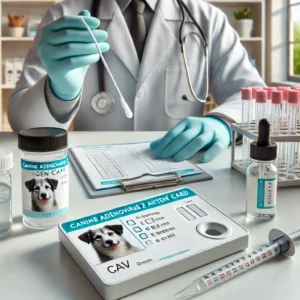
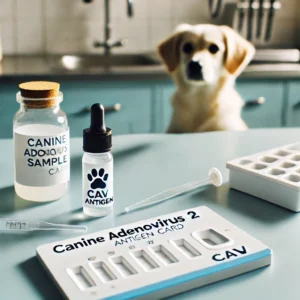
Canine Adenovirus Type 2 (CAV-2) is a key pathogen in respiratory infections in dogs, often contributing to kennel cough syndrome. The Canine Adenovirus 2 (CAV) Antigen Test Card offers a simple, rapid, and accurate diagnostic tool to detect CAV-2 antigens in canine samples, such as nasal or throat swabs. This test is essential for early diagnosis and management of respiratory infections, ensuring the health of individual dogs and preventing outbreaks in kennels and shelters.
Understanding Canine Adenovirus Type 2 (CAV-2)
CAV-2 is a non-enveloped, double-stranded DNA virus belonging to the Adenoviridae family. It primarily targets the respiratory tract, causing mild to severe respiratory symptoms.
Key Facts:
- Transmission: Spread via aerosolized droplets, direct contact, or contaminated surfaces.
- Symptoms:
- Mild cases: Coughing, nasal discharge, and fever.
- Severe cases: Pneumonia, lethargy, and difficulty breathing.
- Epidemiology: Common in crowded environments such as kennels and shelters.
For more details on CAV-2 and its impact, visit the American Veterinary Medical Association (AVMA).
Features of the CAV Antigen Test Card
- Rapid Detection:
- Results available within 10 minutes, enabling prompt clinical decisions.
- High Sensitivity and Specificity:
- Accurately detects CAV-2 antigens, minimizing false positives and negatives.
- Easy-to-Use Design:
- Requires minimal training; suitable for in-clinic use and field settings.
- Versatile Sample Types:
- Compatible with nasal swabs, throat swabs, and other respiratory samples.
- Portable and Compact:
- Ideal for emergency use, mobile veterinary clinics, and shelters.
- Affordable and Efficient:
- Cost-effective diagnostic solution for routine screening and outbreak management.
Applications in Veterinary Practice
- Clinical Diagnosis:
- Identifies CAV-2 infections in symptomatic dogs presenting with respiratory distress.
- Kennel and Shelter Monitoring:
- Screens dogs during outbreaks to prevent the spread of infection.
- Post-Vaccination Monitoring:
- Distinguishes between vaccine-induced and natural infections.
- Pre-Adoption Testing:
- Ensures healthy animals are placed into new homes.

How the CAV Antigen Test Card Works
The test card employs immunochromatographic technology to detect CAV-2 antigens in clinical samples.
Step-by-Step Protocol:
- Sample Collection:
- Use a sterile swab to collect nasal or throat samples from the dog.
- Test Application:
- Insert the swab into the provided buffer solution and mix thoroughly.
- Apply the extracted sample to the designated well on the test card.
- Incubation:
- Allow the test card to develop for 10 minutes at room temperature.
- Result Interpretation:
- Positive: Two visible lines (control and test).
- Negative: One visible line (control only).
- Invalid: No control line indicates a test failure; repeat the test.
Benefits of the CAV Antigen Test Card
- Rapid Results:
- Provides actionable information within minutes, aiding in timely treatment.
- Non-Invasive Testing:
- Utilizes simple swab samples, reducing stress for the animal.
- Enhanced Outbreak Control:
- Quickly identifies infected animals, enabling isolation and targeted intervention.
- Improved Clinical Outcomes:
- Facilitates early diagnosis and treatment, improving recovery rates.
- Cost-Effective:
- Reduces the need for more expensive and time-consuming laboratory testing.
Challenges and Future Directions
Challenges:
- Sample Quality:
- Poor sample collection can lead to inaccurate results.
- False Negatives:
- Early or mild infections may produce undetectable antigen levels.
Future Innovations:
- Multiplex Testing:
- Development of test cards that can detect multiple respiratory pathogens simultaneously.
- Digital Integration:
- Incorporation of reader devices for precise quantitative results and automated data logging.
Conclusion
The Canine Adenovirus 2 (CAV) Antigen Test Card is an invaluable tool for veterinarians and shelter managers, enabling fast and reliable detection of CAV-2 infections. Its portability, ease of use, and rapid results make it indispensable for managing respiratory infections in dogs, safeguarding both individual animals and larger populations.
For more information on diagnostic tools and CAV-2 research, visit: