
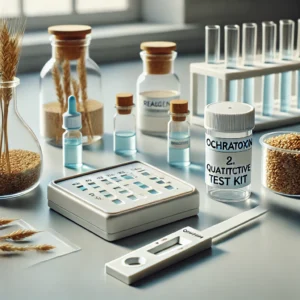
Ochratoxin A (OTA) is a mycotoxin of significant concern in global food and feed systems. Produced by fungi such as Aspergillus and Penicillium, OTA is a contaminant commonly found in improperly stored agricultural products, including cereals, coffee, spices, dried fruits, and animal feed. Known for its nephrotoxic, immunosuppressive, and carcinogenic effects, OTA presents a critical challenge to public health and agricultural industries. The Ochratoxin A Quantitative Test Kit offers a highly effective solution for rapid and precise detection, empowering stakeholders to meet safety standards and protect health.

Understanding Ochratoxin A (OTA)
Ochratoxin A is classified as a possible human carcinogen (Group 2B) by the International Agency for Research on Cancer (IARC). Its occurrence in food and feed results from fungal contamination under conditions of high humidity, poor storage, and inadequate drying processes.
Health Risks:
- In Humans:
- Chronic Exposure: Linked to kidney damage, immunosuppression, and potential carcinogenesis.
- Acute Exposure: May lead to nephrotoxicity and gastrointestinal symptoms.
- References: World Health Organization (WHO) guidelines on mycotoxin exposure.
- In Animals:
- Reduced growth rates, feed efficiency, and fertility.
- OTA-contaminated feed impacts productivity and raises economic concerns for livestock farmers (FAO Feed Safety Guidelines).
- Economic Impact:
- Losses due to crop rejection, livestock health costs, and reduced trade opportunities.
Features of the Ochratoxin A Quantitative Test Kit
- High Sensitivity:
- Detects OTA at extremely low concentrations, ensuring compliance with global safety standards.
- Regulatory Limits: FDA Mycotoxin Guidance Levels.
- Accurate Quantification:
- Provides exact measurements of OTA concentrations, facilitating data-driven decisions.
- Speed and Efficiency:
- Delivers results within 20–30 minutes, enabling real-time monitoring and rapid intervention.
- User-Friendly Design:
- Suitable for laboratory professionals and non-specialists, thanks to its clear instructions and simple operation.
- Wide Applicability:
- Compatible with diverse matrices, including grains, coffee, wine, spices, and animal feed.
- Regulatory Compliance:
- Adheres to standards set by:

Applications in Food and Feed Safety
- Agricultural Testing:
- Detects OTA contamination in cereals, nuts, spices, and dried fruits at various stages of production.
- Reference: USDA Grain Inspection Handbook.
- Animal Feed Quality Control:
- Prevents OTA-contaminated feed from affecting livestock health.
- Standards: FAO Feed and Food Safety Standards.
- Beverage Safety:
- Tests coffee, wine, and beer for compliance with OTA regulations (EFSA Risk Assessments for Beverages).
- Export Compliance:
- Ensures products meet international safety thresholds for global trade.
- Guidelines: FDA Mycotoxin Monitoring.
How the Ochratoxin A Quantitative Test Kit Works
Step-by-Step Protocol:
- Sample Preparation:
- Homogenize and extract OTA using the kit’s specialized reagents.
- Follow industry-standard protocols: EPA Sample Preparation Guidelines.
- Application:
- Add the prepared sample to the test cassette or strip and incubate for the recommended duration.
- Quantification:
- Use a portable reader device to measure OTA concentrations accurately.
- Result Analysis:
- Compare results against regulatory limits to determine compliance.
Pro Tips:
- Ensure proper sample handling to avoid cross-contamination.
- Store test kits as per manufacturer recommendations for consistent results.
Benefits of the Ochratoxin A Quantitative Test Kit
- Food Safety Assurance:
- Reduces the risk of OTA exposure for consumers, protecting public health (CDC Mycotoxin Guidelines).
- Economic Advantages:
- Avoids costly recalls, trade rejections, and productivity losses.
- Regulatory Compliance:
- Simplifies adherence to national and international standards.
- Scalability:
- Suitable for small-scale farms, large production facilities, and research institutions.
- Portability and Flexibility:
- Ideal for use in laboratories, field testing, or processing facilities.
Challenges in Ochratoxin A Management
- Preventative Measures:
- Promote proper storage conditions and drying techniques to minimize fungal growth.
- Reference: FAO Mycotoxin Prevention Guidelines.
- Comprehensive Testing:
- Expand monitoring to include multiple mycotoxins, as co-contamination is common in agricultural products.
- Global Awareness:
- Educate producers, regulators, and consumers about OTA risks and detection technologies.
Future Perspectives
Advances in technology are improving OTA detection and mitigation. The integration of multiplex assays, blockchain-based traceability, and machine learning in mycotoxin management is shaping the future of food safety.
Research and Development:
- Explore innovations in fungal-resistant crop varieties (NIH Mycotoxin Research).
- Invest in automated, high-throughput testing systems for large-scale applications.
Conclusion
The Ochratoxin A Quantitative Test Kit is an indispensable tool for ensuring food and feed safety in global supply chains. Its high sensitivity, rapid results, and user-friendly operation empower industries to address OTA contamination effectively. By adopting robust testing and prevention strategies, stakeholders can protect public health, meet regulatory standards, and maintain market trust.
For more resources on OTA detection and prevention, visit: